
Retail Auditing Explained: What You Should Be Measuring

Every year, FMCG and retail brands lose millions in revenue to a problem they can’t see on a standard spreadsheet: the execution gap.
If your head office data doesn’t match what is happening on the floor, your brand is quietly losing sales and trust.
In this article, I take a closer look at the reality on the floor and what your teams should be measuring to avoid those gaps.
The Reality of the Retail Floor
The typical retail environment moves quickly. This means head office data may say one thing, but the physical shop floor tells a completely different story.
For sales and marketing managers, this disconnect is often where revenue quietly leaks away despite months of planning.
If you’re only hearing about issues in an end-of-month audit, it’s already too late to react.
Protecting your sales performance requires real-time on-the-ground insights while you still have time to fix it.
This comes from implementing an auditing process that identifies issues as they happen so your field teams can step in, sort it out, and keep your product moving.
What to Measure Beyond Stock Counts
Only relying on high-level inventory data to judge your retail health can be a costly mistake.
To protect your revenue, your field teams must audit the specific points where execution typically fails.
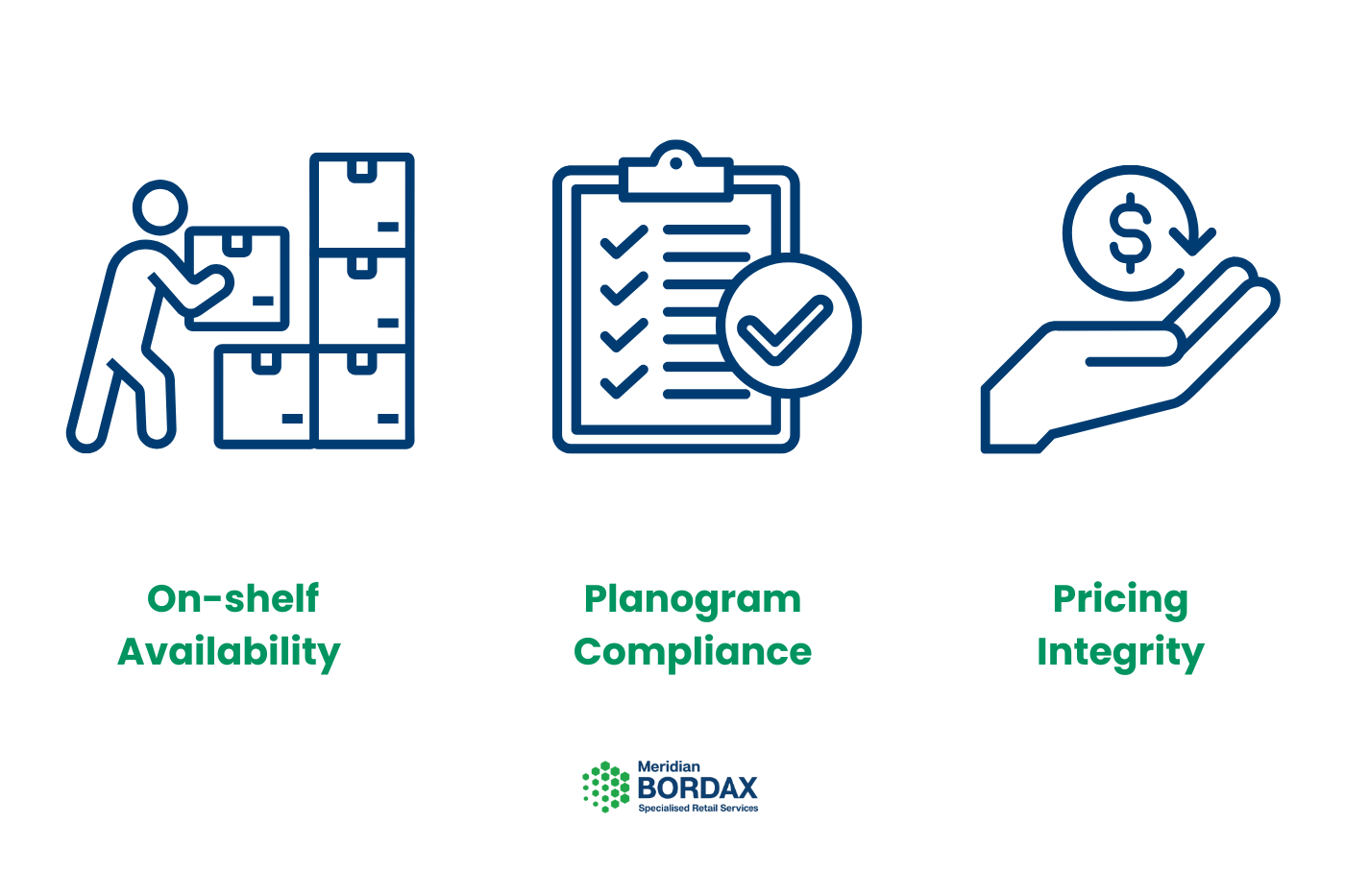
On-shelf availability and stock integrity
An item can’t sell if a shopper can’t physically reach it.
Auditing must track more than whether the stock is inside the building. It also needs to verify whether products are actually on the shelf and free of phantom inventory.
This means fewer sales lost to shrinkage or administrative errors and more happy shoppers.
Planogram compliance and share of shelf
Retail agreements guarantee specific spots on the shop floor for your brand.
Regular auditing ensures your product variants are grouped according to your planogram and checks that competitors aren’t stealing your shelf space.
When your layout remains intact, so does your sales performance.
Pricing integrity and promotional execution
A promotion without a properly set-up point-of-sale display is completely ineffective.
Field agents must verify that promotional elements are correctly constructed on day one and that the active shelf price exactly matches your system data.
Any pricing discrepancy at the till creates immediate friction that kills the sale.
Win the Shelf with Bordax
Data only matters if it changes what happens on the shop floor today. That means accumulating weekly spreadsheet reports won’t fix an empty shelf.
At Bordax, we fix compliance issues before they affect your bottom line. We focus on getting it done so that your brand remains profitable. Reach out to our team today to learn more.
Ready to close the execution gap?
Bordax audits the shelf, fixes compliance issues on the spot, and keeps your brand profitable — before problems ever reach your bottom line.
Get In Touch Today